
Welcome to Berlin
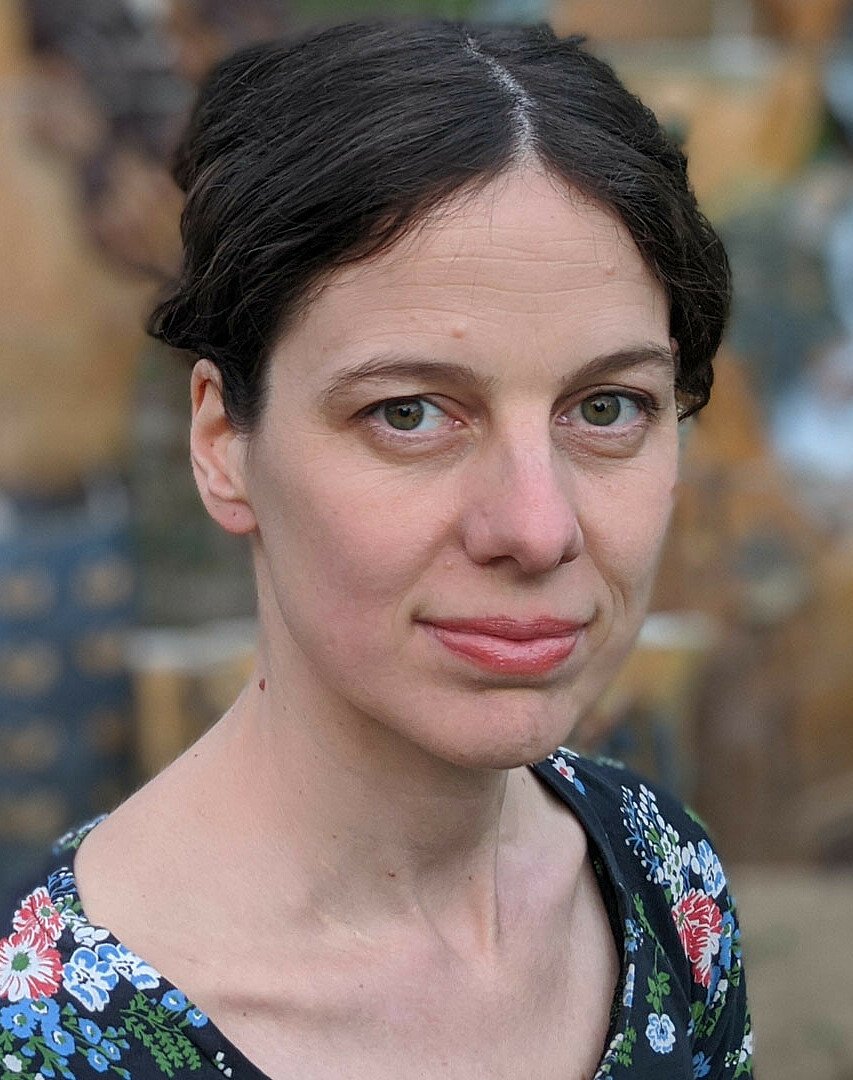
Julia Leinweber
Professor and Head of the Institute of Midwifery
Charité Universitätsmedizin Berlin
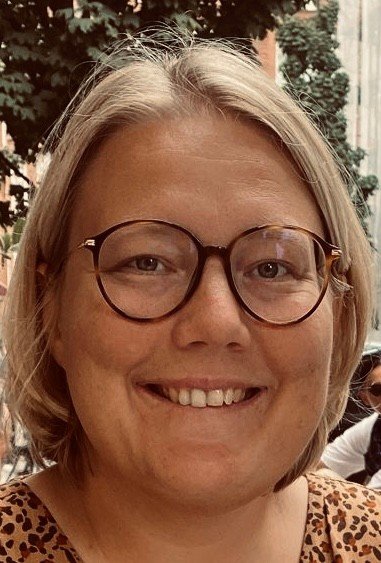
Ann-Jule Wowretzko
Chair of the Berlin Midwives Association
Dear Delegate,
On behalf of the Institute of Midwifery at Charité, the Berlin Midwives Association, and the Steering Committee of the International Conference Series, it is our great pleasure to welcome you to Berlin and to the Langenbeck-Virchow-Haus. We are delighted to have you with us and hope you find the conference stimulating, fruitful, and enjoyable.
The conference programme, including details of the concurrent sessions and other important information, can be accessed via the QR code on your conference badge. The abstracts are available in the conference app.
With the conference fully booked, we know that many sessions will attract strong interest. We have tried to ensure that there is sufficient space for everyone wishing to attend. If your first-choice room is full, we kindly ask you to join another session to ensure the comfort and wellbeing of all participants. To avoid disruption, we would also appreciate it if you could remain in the same room for the duration of each session.
On Tuesday and Wednesday, some sessions will take place in the neighboring historic anatomy building of the Charité. You can access directions to these rooms via the QR code on your conference badge.
Please take some time to visit our exhibitors on the ground floor. Nearby, you will also find the poster area.
A different set of posters will be actively presented each day. We warmly invite you to meet the presenters, engage with their research, and return to the poster area throughout the conference. Please check the programme for the scheduled presentation times.
If you require any further information or assistance, our conference team at the registration desk will be very happy to help throughout the conference.
Once again, a very warm welcome.
We wish you an inspiring conference and a wonderful time with us in Berlin.
Programme
The conference programme is available here. Across three days, we explore how normal labour and birth can be enabled, protected and sustained in contemporary maternity care.
The programme brings together research on midwifery models, continuity, autonomy, respectful care, labour physiology, birth spaces, trauma-informed practice, induction, safety, workforce, education and systems for midwifery-led care.
or Scan the QR code below:

Keynote Presentations:
Name
Background
Title of Keynote
Prof. Soo Downe
Soo is Professor of Midwifery Studies and Associate Dean for Research and Knowledge Exchange, following 15 years as a clinical and research midwife in Derby, UK. Her research explores physiological labour and birth, service user experiences, and the organisation of maternity care, and she has contributed to WHO guideline development and several Lancet writing groups, alongside over 200 peer-reviewed publications. She founded the International Labour and Birth Research Conference in 2001, chairs its Steering Committee, and leads the Babies Born Better (B3) survey, which has gathered over 105,000 responses from around the world.
Science, Practice, and Action: optimising physiological labour and birth for the future
Anna Af Ugglas

Chief Executive of the International Confederation of Midwives (ICM), based in The Hague. A Swedish midwife by background, she has worked for more than three decades in maternal and newborn health, sexual and reproductive health and rights, and health workforce development across humanitarian and development settings.
Too much, too soon – too little, too late: Midwives protecting women in a world of extremes
Prof. Ank de Jonge

Professor of Midwifery Science at Amsterdam UMC. She combines international quantitative and qualitative research on the quality, safety, and organisation of midwifery care with her work as a primary care midwife. She currently leads the Continuity of Midwifery Care (COMIC) study and is leading the Variation in Organisation of Integrated Care (VOICE) study on integrated maternity care.
To be or to do, is that the question? – Maternal and newborn care in the 21st century
Prof. Christine Rubertsson
Professor in Reproductive, Perinatal and Sexual Health at Lund University in Sweden, and a working midwife at Skäne University Hospital in Malmö.
Her research focuses on fear of birth, postnatal care, and women’s health.
Her keynote explores midwifery models of care in Sweden and presents examples of midwifery model of postnatal care at home, midwifery continuity of care for women with vulnerability, and midwifery students learning relational continuity of care at Lund University.
Scaling up Midwifery Models of Care in Sweden
Prof. Doreen Kainyu Kaura

Professor in the Faculty of Community and Health Sciences at the University of the Western Cape, South Africa and PhD in maternal health informatics.
A midwife, researcher and educator, she has worked across Kenya, Botswana, Finland and South Africa, building academic and clinical bridges in maternal and reproductive health. Her research focuses on sexual, reproductive, maternal and neonatal health, midwifery education, digital innovations among many other areas of expertise.
The Role of Midwifery Obstetric Units (MOUs) in Promoting Physiological Birth in Africa
Prof. Hannah Dahlen

Professor of Midwifery in the School of Nursing and Midwifery, Western Sydney University.
She has been a midwife for more than 35 years, and much of her research has focused on the short- and long-term impacts of birth interventions on maternal and child health.
“Audacious Creativity“ in a Post-Truth World
Prof. Julia Seng
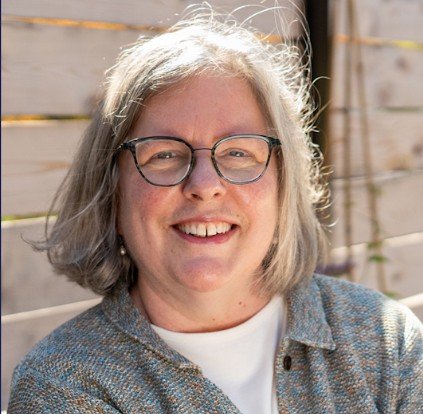
A nurse-midwife in the US and a Professor in the School of Nursing, Professor of Obstetrics and Gynecology, Professor of Women’s Studies.
She studies the impact on experience and perinatal outcomes of childhood trauma and complex posttraumatic stress. Currently, she is advancing the use of interventions for maltreatment-related traumatic stress that can be delivered by perinatal staff.
Addressing Traumatic Stress in Pregnancy to Advance Normal Birth
Prof. Mandy Mangler

A physician, Professor of Women’s Health and Obstetrics, and author of Das große Gynbuch, a comprehensive guide on women’s health.
She leads gynecology and obstetrics at two major clinics in Berlin and teaches at Evangelische Hochschule Berlin. She is also known for her work on feminist perspectives in women’s health and her podcast GynCast. She advocates for a female-centred approach to obstetrics and gynaecology, aims to close knowledge gaps in women’s health, and brings science into societal dialogue. Her work has earned her the Berlin Women’s Prize 2022.
Midwifery First: Building sustainable care structures
Prof. Mechthild Groß

Professor of Midwifery and Founding Director of the Midwifery Research and Education Unit at Hannover Medical School (MHH). A trained nurse and midwife with a background in psychology, she has been shaping midwifery research in Germany since its beginnings. Her research focuses on the physiology and complexity of labour, early labour, labour duration, stillbirth, and variations in maternity care, and she has led large multicentre studies and contributed to WHO recommendations on intrapartum care. Her work has been recognised with the Pschyrembel Prize for outstanding contributions to midwifery science.
Scaling Up Midwifery: Global lessons learnt for Central Europe
Prof. Sue Carter

Professor of Psychology at the University of Virginia and distinguished university scientist (emerita) at Indiana University, and executive director of the Kinsey Institute. She is a pioneer of oxytocin research on social bonding and attachment, including adult bonds. Her work spans birth, lactation, and parental behaviour, and she continues to study how oxytocin pathways shape social relationships and health across the lifecourse.