

Programme
Keynote Presentations:
Name
Background
Title of Keynote
Anna Af Ugglas

Chief Executive of the International Confederation of Midwives (ICM), based in The Hague.
A Swedish midwife by background, she has worked for more than three decades in maternal and newborn health, sexual and reproductive health and rights, and health workforce development across humanitarian and development settings.
Too much, too soon – too little, too late: Midwives protecting women in a world of extremes
Prof. Ank De Jonge

Professor of Midwifery Science at Amsterdam UMC. She combines international quantitative and qualitative research on the quality, safety, and organisation of midwifery care with her work as a primary care midwife. She currently leads the Continuity of Midwifery Care (COMIC) study and is leading the Variation in Organisation of Integrated Care (VOICE) study on integrated maternity care.
To be or to do, is that the question? – Maternal and newborn care in the 21st century
Prof. Doreen Kainyu Kaura

Professor in the Faculty of Community and Health Sciences at the University of the Western Cape, South Africa and PhD in maternal health informatics.
A midwife, researcher and educator, she has worked across Kenya, Botswana, Finland and South Africa, building academic and clinical bridges in maternal and reproductive health. Her research focuses on sexual, reproductive, maternal and neonatal health, midwifery education, digital innovations among many other areas of expertise.
The Role of Midwifery Obstetric Units (MOUs) in Promoting Physiological Birth in Africa
Prof. Hannah Dahlen
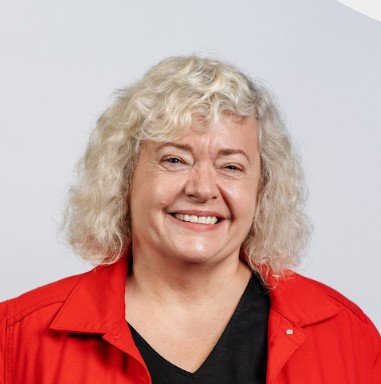
Professor of Midwifery in the School of Nursing and Midwifery, Western Sydney University.
She has been a midwife for more than 35 years, and much of her research has focused on the short- and long-term impacts of birth interventions on maternal and child health.
“Audacious Creativity“ in a Post-Truth World
Prof. Julia Seng
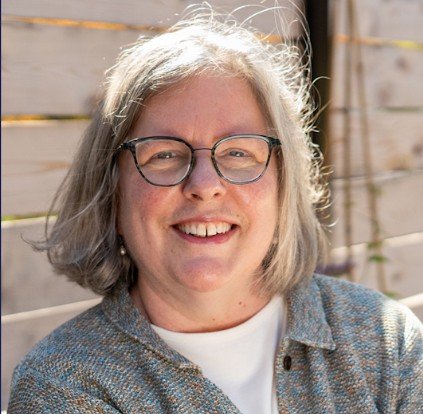
A nurse-midwife in the US and a Professor in the School of Nursing, Professor of Obstetrics and Gynecology, Professor of Women’s Studies.
She studies the impact on experience and perinatal outcomes of childhood trauma and complex posttraumatic stress. Currently, she is advancing the use of interventions for maltreatment-related traumatic stress that can be delivered by perinatal staff.
Addressing traumatic stress in pregnancy to advance normal birth
Prof. Mandy Mangler

A physician, Professor of Women’s Health and Obstetrics, and author of Das große Gynbuch, a comprehensive guide on women’s health.
She leads gynecology and obstetrics at two major clinics in Berlin and teaches at Evangelische Hochschule Berlin. She is also known for her work on feminist perspectives in women’s health and her podcast GynCast. She advocates for a female-centred approach to obstetrics and gynaecology, aims to close knowledge gaps in women’s health, and brings science into societal dialogue. Her work has earned her the Berlin Women’s Prize 2022.
Midwifery first: building sustainable care structures
Prof. Mechthild Groß

Professor of Midwifery and Founding Director of the Midwifery Research and Education Unit at Hannover Medical School (MHH). A trained nurse and midwife with a background in psychology, she has been shaping midwifery research in Germany since its beginnings. Her research focuses on the physiology and complexity of labour, early labour, labour duration, stillbirth, and variations in maternity care, and she has led large multicentre studies and contributed to WHO recommendations on intrapartum care. Her work has been recognised with the Pschyrembel Prize for outstanding contributions to midwifery science.
Upscaling midwifery: Global lessons learnt for Central Europe
Prof. Sue Carter

Professor of Psychology at the University of Virginia and distinguished university scientist (emerita) at Indiana University, and executive director of the Kinsey Institute. She is a pioneer of oxytocin research on social bonding and attachment, including adult bonds. Her work spans birth, lactation, and parental behaviour, and she continues to study how oxytocin pathways shape social relationships and health across the lifecourse.